

1. this would be an example of urban sprawl as its a completely new suburb that is spreading outwards. it isn't considered urban consolidation because its not building up on other buildings, compacting space and raising the population in a small area. its completely new and is moving outwards.
2. i think there are many good things and many bad things that could happen as an outcome of this development. in the article it says that it creates job opportunities, it's environmentaly friendly and it will have a strong community spirit. the development as a whole would however impact the environment massivly. the natural habititat in the area would be destroyed in the building process, the environment and the ecosystem would be affected massivly and animals will be driven from their homes. this new development also means that more resources will need to be supplied by sydney, such as roads and electricity.
Subscribe To

 Posts
All Comments
Posts
All Comments
Wednesday, March 23, 2011

Wednesday, March 16, 2011
Urban Planning and Development
1. the term urban sprawl is used to describe a city when it becomes to populated and is forced to spread outwards.
2. the term urban consolidation is used to describe the rising population in cities.
3. a highly urbanised country is a country that has a lot of urban spraw, has a high population density.
4. it is estimated that 92% of australians live in urban areas. australia's urban population is concentrated in major cities, which in 2006 accounted for over 13 million people or 65% of Australia's population.
5. the main factors that have influenced the location's of Australians capital cities are transport advantages, also the flat land that is available and the climate.
6. population density is the population in a particular area divided by the amount of land in the area. population density is related to urban sprawl as it is a solution to the problem. the move from urban sprawl to higher population density in cities is urban consolidation.
7. Australian cities don't have very high population densities. Sydney for example has a population density of 2076 per square kilometre compared to Mumba with a population density of 29650 per square kilometre.
8. there are many advantages that urban consolidation has over urban sprawl. infrastructure like public transport, electricity and water supplies are already built for the developments.
9. urban planners have had to be inovative in their design of apartments and new estates to manage the impacts of population growth in cities.
10. A) Melbourne
B) Population divided by land area
C) Sydney, Melbourne, Adelaide, Woolongong, Perth, Newcastle, Canberra, Brisbane, Gosford
D) 8 out 10 of Australias largest cities have a population density over 1000
11. many of the residents would stronly argue that the development of apartments such as the ones in fig. 9.5 lower the value of their properties. also the constant noise and disruption would be extremely annoying for residents who are trying to live their normal lives.
12. living in a detached housing estate is a lot more private than apartment living as you are on your own property. it also allows you to make the regulations and rules, such as the ownership of pets, etc. having your own property also enables you to design and aesthetically modify your property to the way you like, it allows you to give your home its own character. it is also easier to have a family which many people want. an advantage of living in an apartment however means you are usually closer to civilisation in terms of entertainment, work and other aspects that make up an urban area. sometimes it gives you things like water views over a harbour, landmark, etc.
2. the term urban consolidation is used to describe the rising population in cities.
3. a highly urbanised country is a country that has a lot of urban spraw, has a high population density.
4. it is estimated that 92% of australians live in urban areas. australia's urban population is concentrated in major cities, which in 2006 accounted for over 13 million people or 65% of Australia's population.
5. the main factors that have influenced the location's of Australians capital cities are transport advantages, also the flat land that is available and the climate.
6. population density is the population in a particular area divided by the amount of land in the area. population density is related to urban sprawl as it is a solution to the problem. the move from urban sprawl to higher population density in cities is urban consolidation.
7. Australian cities don't have very high population densities. Sydney for example has a population density of 2076 per square kilometre compared to Mumba with a population density of 29650 per square kilometre.
8. there are many advantages that urban consolidation has over urban sprawl. infrastructure like public transport, electricity and water supplies are already built for the developments.
9. urban planners have had to be inovative in their design of apartments and new estates to manage the impacts of population growth in cities.
10. A) Melbourne
B) Population divided by land area
C) Sydney, Melbourne, Adelaide, Woolongong, Perth, Newcastle, Canberra, Brisbane, Gosford
D) 8 out 10 of Australias largest cities have a population density over 1000
11. many of the residents would stronly argue that the development of apartments such as the ones in fig. 9.5 lower the value of their properties. also the constant noise and disruption would be extremely annoying for residents who are trying to live their normal lives.
12. living in a detached housing estate is a lot more private than apartment living as you are on your own property. it also allows you to make the regulations and rules, such as the ownership of pets, etc. having your own property also enables you to design and aesthetically modify your property to the way you like, it allows you to give your home its own character. it is also easier to have a family which many people want. an advantage of living in an apartment however means you are usually closer to civilisation in terms of entertainment, work and other aspects that make up an urban area. sometimes it gives you things like water views over a harbour, landmark, etc.
Urban Renew and Decay
aesthetics - The branch of philosophy that deals with the nature and expression of beauty, as in the fine arts.

this picture expresses various colours, emotions, messages and feelings that all contribute to the overall aesthetical qualities.
safety - The condition of being safe; freedom from danger, risk, or injury.

in this picture the man in the cage is protected by the metal framework from the enormous man eating, great white shark.
slums - A heavily populated urban area characterized by substandard housing and squalor.

this is a picture of a slum located in Mumbai, as you can see it is extremely overpopulated, the houses are very low grade and are made out of thin sheets of metal and finally the good health and cleanlyness of the place is not evident or inviting
decay - To break down into component parts; rot.

decay is evident in this photo as the peice of fruit is rotting.
reconstruction and renewal - is the the rebuilding and renewal of towns and cities that have been demolished as a result of war, natural disasters and other destructive forces.

in this photo the building has been demolished during the war and an attempt to rebuild it is being started.
Transport - To carry from one place to another; convey. transport involves the moving of a particular thing or a group of things from one location to another.
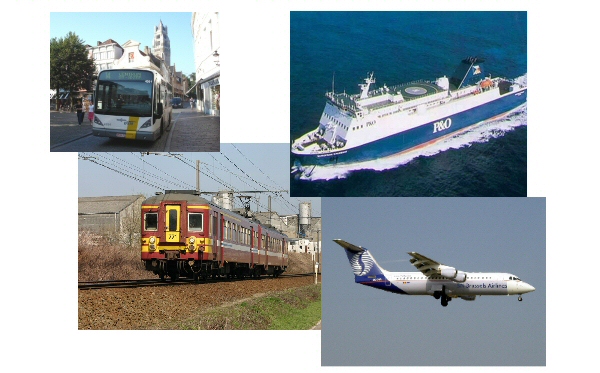
transport examples in this phto are trains, plains, vehicles (bus) and boats. they are all forms of transport.
suburbanization - Of, relating to, or characteristic of a suburb.

in this photo there is an overcrowded suburb which is a characteristic that makes it what it is.
environmental factors - environmental factors are different contributors that affect the environment in different ways.

in this photo an industrial area is producing air polution which is an environmental factor.
Light and Sound - Light and sound are aspects that essentially make up the world we live in. light comes from the sun and enables us to see our surroundings. sound enables us to hear things that are happening. swithout light and sound there would not be a civilisation to live in.

in this photo the police siren is producing blue and red lights and also giving off sound to let everyone in the surrounding area know there is a police car.
Monday, March 7, 2011
7.6 The Tweed River Entrance Sand Bypassing Project
1. it became necessary to extend the tweed river breakwaters due to further sand build-up at the entrance of the heads.
2. The breakwater on the southern side of the tweed river acted to trap sand that would naturally be moved in a northerly direction by longshore-drift. The continual build-up of sand on the southern side of the breakwater eventually caused the river mouth to once again silt up.
3. The dredging of the sand at the mouth of the Tweed River was trucked and moved to the gold coast for beach nourishment. This is an expensive solution and one that would need to occur continually in order to maintain the sand supply to the beaches. The removal of the sand is essential for the ships to be able to get through the tweed river mouth. The natural process that causes sandbars to form is silting.
4. The dredging of the tweed river mouth and associated beach nourishment program was only a short term solution as the silting of sand at the mouth of the tweed river is an ongoing process and this management strategy is just not effective long-term.
5. The TRESBP replaces the natural process known as longshore drift in the construction of breakwaters. This construction breaks the drift of the ocean when it hits the beach as it cannot go past the wall of rock.
6. I believe the TRESBP is one of the most successful projects in Australia for a few reasons. Firstly because the intended aim of the project was to stop silting at the mouth of the Tweed River and to stop the formation of a sand bar. The construction of breakwaters was the best thing that could have been done and did work in stopping the silting – temporarily. Even though it is very costly this project can be used as a learning curve for future projects. It gives developers an idea on what they should do the future, which may be even more beneficial and less costly. I’d say as a whole the TRESBP was very successful.
7. –
8. 1962 – you can see that the Tweed River entrance is extremely vulnerable to the build up of sand known as silting and something needs to be done.
1969 – The construction of the breakwaters has opened the Tweed River heads and caused the beach to shift position. There is more sand on the surrounding beaches as the process of dredging has also taken place.
1994 – The breakwaters haven’t really changed but the amount of sand on the surrounding beaches has increased dramatically. Fairly soon a new solution will need to be put in place as the sand will reach the edge of the breakwater and will once again, begin to form a sandbar.
9. In the topographic map the length of the breakwater is approximately 350 metres in 1994. In 1962 the breakwater was not present.
Monday, February 28, 2011
Year 10: Coastal Management Vocabulary List
CONSTRUCTION WAVES - small low energy waves that deposit sand onto beaches
CORRASION - occurs when waves crash over rock shelves and move rock and other material helping to erode the rock shelf away
CORROSION - the action of salt and minerals like iron that are contained in rock, weakening the rock and making it more susceptable to erosion
DEPOSITION- the depositing of sand and rock particles caused by wind and wave action forming features such as beaches
DESTRUCTIVE WAVES - large waves formed by tropical cyclones and storms that erode material from beaches
EROSION- the removal of rock and sand particles as a result of wind and wave action
FETCH - the distance the wind travels over the ocean to form waves
FOREDUNE - the closest dune to the ocean or the first dune in a sand dune system
HYDRAULIC ACTION - where waves enter cracks in rocks. air is compressed by the force of the water causing erosion and forming features such as blow holes
LONGSHORE DRIFT - the process, caused by waves hitting the coast at an angle, that is responsibe for moving sand along the coast
REFRACTION - the bending of waves around headlands into bays
SURF AND SWASH ZONE - the active part of the coast in terms of erosion and deposition of sand by wave action; the surf zone is immediately adjacent to the coast and the swash zone is at the shore once the waves have broken
VEGETATION SUCCESSION - the natural progression of vegetation from low-lying, salt tolerant plants on the foredune, through to shrubs and established trees on the hind dunes
WAVE HEIGHT - the verticle distance between the trough and the peak of the wave
WAVELENGTH - the horizontal distance between wave peaks
BREAKWATERS - a barrier that breaks the force of wavebefore it enters a harbour or bay
FAECIAL COLIFORM - Aerobic Bacteria Found in the Colon or Faeces, often used as indicators of faecal contamination of water supplies
SILTING - the filling up or raising of the bed of a body of water by depositing silt.TIDAL FLUSHING -
GROUND SWELL - the ground swell is the swell out in the ocean created by the wind
PLUNGING WAVES - break on beaches where the slope is moderately steep. board riders like these waves because of the tubes they form
SPILLING WAVES - break far from the shore on beaches with gentle slopes. the surf gently rolls over the front so these waves are good for body surfing
SURGING WAVES - occur on very steep beaches. the waves roll up the steep face rather than breaking over it. they cause erosion
WIND SWELL - if waves travel only a short distance before they hit land they form a wind swell. a wind swell is marked by a short wavelength and high frequency of waves hitting the coast
AEOLIAN - is another word for wind - aelian transportation of sand is the same as wind transportation of sand
SPINIFEX - spinfex is a type of low-lying coastal vegetation found in the foredunes close to a beach
DREGDING - the mass removal of sand from one place - by humans - to another
ACCRETION CYCLE -
GROYNES - constructed along beaches to catch sand and make beaches wider
REVEGETATION - the replanting of regetation along the coastline
SEA WALLS - used to stop erosion of the coastline and protect property. sea walls often replace the foredune. which is an essential part of the beach erosion
ENVIRONMENTAL IMPACT STUDY - the study of various impacts along the coastline that affect the environment
IMPACT ASSESSMENT - an assessment of the impacts that are affecting the coastline and the environment
BITOU BUSH - is a perennial, dense, sprawling shrub that has recently become an extremely invasive coastal weed
MARRAM GRASS - a perennial grass native to sandy shores along the Great Lakes and Atlantic Coast of North America. it is commonly planted as a sand binder to help stabalise sand dunes.NOXIOUS WEED - a noxious weed is a native or non-native plant that is unwanted in a particular area.
ANEMOMETER - An instrument for measuring wind force and velocity.
HYGROMETER -
CORROSION - the action of salt and minerals like iron that are contained in rock, weakening the rock and making it more susceptable to erosion
DEPOSITION- the depositing of sand and rock particles caused by wind and wave action forming features such as beaches
DESTRUCTIVE WAVES - large waves formed by tropical cyclones and storms that erode material from beaches
EROSION- the removal of rock and sand particles as a result of wind and wave action
FETCH - the distance the wind travels over the ocean to form waves
FOREDUNE - the closest dune to the ocean or the first dune in a sand dune system
HYDRAULIC ACTION - where waves enter cracks in rocks. air is compressed by the force of the water causing erosion and forming features such as blow holes
LONGSHORE DRIFT - the process, caused by waves hitting the coast at an angle, that is responsibe for moving sand along the coast
REFRACTION - the bending of waves around headlands into bays
SURF AND SWASH ZONE - the active part of the coast in terms of erosion and deposition of sand by wave action; the surf zone is immediately adjacent to the coast and the swash zone is at the shore once the waves have broken
VEGETATION SUCCESSION - the natural progression of vegetation from low-lying, salt tolerant plants on the foredune, through to shrubs and established trees on the hind dunes
WAVE HEIGHT - the verticle distance between the trough and the peak of the wave
WAVELENGTH - the horizontal distance between wave peaks
BREAKWATERS - a barrier that breaks the force of wavebefore it enters a harbour or bay
FAECIAL COLIFORM - Aerobic Bacteria Found in the Colon or Faeces, often used as indicators of faecal contamination of water supplies
SILTING - the filling up or raising of the bed of a body of water by depositing silt.TIDAL FLUSHING -
GROUND SWELL - the ground swell is the swell out in the ocean created by the wind
PLUNGING WAVES - break on beaches where the slope is moderately steep. board riders like these waves because of the tubes they form
SPILLING WAVES - break far from the shore on beaches with gentle slopes. the surf gently rolls over the front so these waves are good for body surfing
SURGING WAVES - occur on very steep beaches. the waves roll up the steep face rather than breaking over it. they cause erosion
WIND SWELL - if waves travel only a short distance before they hit land they form a wind swell. a wind swell is marked by a short wavelength and high frequency of waves hitting the coast
AEOLIAN - is another word for wind - aelian transportation of sand is the same as wind transportation of sand
SPINIFEX - spinfex is a type of low-lying coastal vegetation found in the foredunes close to a beach
DREGDING - the mass removal of sand from one place - by humans - to another
ACCRETION CYCLE -
GROYNES - constructed along beaches to catch sand and make beaches wider
REVEGETATION - the replanting of regetation along the coastline
SEA WALLS - used to stop erosion of the coastline and protect property. sea walls often replace the foredune. which is an essential part of the beach erosion
ENVIRONMENTAL IMPACT STUDY - the study of various impacts along the coastline that affect the environment
IMPACT ASSESSMENT - an assessment of the impacts that are affecting the coastline and the environment
BITOU BUSH - is a perennial, dense, sprawling shrub that has recently become an extremely invasive coastal weed
MARRAM GRASS - a perennial grass native to sandy shores along the Great Lakes and Atlantic Coast of North America. it is commonly planted as a sand binder to help stabalise sand dunes.NOXIOUS WEED - a noxious weed is a native or non-native plant that is unwanted in a particular area.
ANEMOMETER - An instrument for measuring wind force and velocity.
HYGROMETER -
Dune Revegetation at Stuarts Point - 7.8 Questions
1. Stuarts Point, which is a small village located on the mid north coast of New South Wales.
2. 1970's - one of the first large-scale beach vegetation schemes in New South Wales was conducted on the sand dunes at Stuarts Point.
1983 - the mouth of the macleay river was just south of grassy headland.
1983 - a large flood cause the macleay river to break through the sand barrier at the south west rocks, creating another entrance for the river.
1965 - the Soil Conservation Service of New South Wales provided native plant seedlings and planting advice to the progress associates of Stuarts Point in what was to be the start of the vegetation program for the dunes.
1970 - a joint venture involving the Department of Lands, the Department of Public Works, The Macleay Shire Council, and the soil Conservation Service of New South Wales was established with the aim of stabilising the sand dunes through a revegetation program.
3. the local community is needed to help stabilise the sand dune system along worth other councils and organisations in the surrounding area. in doing this the local community would help the fishing and tourism industries in the area.
4. the sand dune area at Stuarts point is important because it ensures that the fishing and tourism industries aren't affected and it also ensures that the sea doesn't breach the wall in severe storms like it has done a few times in the past, resulting in the destruction of property and other vegetation.
5. the primary species of vegetation on the beachfront consists of grasses and creepers. the secondary species includes shrubs and short lived trees, highly adapted prolific re-seeders and fast growing plants. the tertiary species at the back of the beachfront includes long lived trees.
6. having vegetation in amongst a sand dune traps the sand so it doesn't blow away. if there is a strong wind and there is no vegetation on the beachfront all the vegetation will be blown away. however, if there is a lot of vegetation in the beachfront the shrubs, plants, etc. all trap the sand which stabilises it and the entire dune doesn't blow away.
7. cattle grazing had a dramatic effect on the dune system as it destroyed all the vegetation. this in tum allowed the wind to blow away the sand and heavy storms to overpower the - now very weak - wall of sand.
8. cattle grazing would have primarily destroyed all living vegetation in the sand dune. this would have allowed things like erosion to happen as the sand is now able to be lifted and blown away. as the sand wall now becomes increasingly fragile the heavy seas also slam against the wall of sand.
9. the groups involved in the rehabilitation program included the Department of Lands, the Department of Public Works, The Macleay Shire Council, and the Soil Conservation Service of New South Wales
10. the first step in the rehabilitation program was the use of a tractor to form a small foredune. on top of this a dune-forming fence was constructed to help trap the wind blown sand and establish a foredune. the next stage involved the planting of trees along the riverbank to stabilise the western margin of the area. and finally, after the planting of the trees was completed, native seedlings were planted into the area between the fordune and the riverbank.
12. the geographical processes that would have caused the macleay river entrance to silt up in 1900 are refraction as the waves would need to bend around the mouth of the river. this would have caused the waves to clash and in turn would create a small underwater sand island over a period of time.
13. a) the stabilising of the sand dunes was extremely successful as the large foredune on the beachfront is now 3-4 metres high and is negligible.
b) the protection of the macleay river system is successful in some ways and not in others. the problem of silting and an unstable sand dune have been conquered but the revegetation project has now introduced a noxious weed known as biteau bush which runs the entire length of the foredune.
c) many groups in the local community have benefited from the revegetation project undertaken at Stuart's point. the community itself is now able to lead their usual lifestyles without worrying about the fishing and tourism industries as much as before. also the knowledge that this management strategy works is beneficial for every group that took a part in the revegetation project. this management strategy is now being used across New South Wales for the benefit of the environment and the surrounding ecosystem.
14. (done in PowerPoint)
2. 1970's - one of the first large-scale beach vegetation schemes in New South Wales was conducted on the sand dunes at Stuarts Point.
1983 - the mouth of the macleay river was just south of grassy headland.
1983 - a large flood cause the macleay river to break through the sand barrier at the south west rocks, creating another entrance for the river.
1965 - the Soil Conservation Service of New South Wales provided native plant seedlings and planting advice to the progress associates of Stuarts Point in what was to be the start of the vegetation program for the dunes.
1970 - a joint venture involving the Department of Lands, the Department of Public Works, The Macleay Shire Council, and the soil Conservation Service of New South Wales was established with the aim of stabilising the sand dunes through a revegetation program.
3. the local community is needed to help stabilise the sand dune system along worth other councils and organisations in the surrounding area. in doing this the local community would help the fishing and tourism industries in the area.
4. the sand dune area at Stuarts point is important because it ensures that the fishing and tourism industries aren't affected and it also ensures that the sea doesn't breach the wall in severe storms like it has done a few times in the past, resulting in the destruction of property and other vegetation.
5. the primary species of vegetation on the beachfront consists of grasses and creepers. the secondary species includes shrubs and short lived trees, highly adapted prolific re-seeders and fast growing plants. the tertiary species at the back of the beachfront includes long lived trees.
6. having vegetation in amongst a sand dune traps the sand so it doesn't blow away. if there is a strong wind and there is no vegetation on the beachfront all the vegetation will be blown away. however, if there is a lot of vegetation in the beachfront the shrubs, plants, etc. all trap the sand which stabilises it and the entire dune doesn't blow away.
7. cattle grazing had a dramatic effect on the dune system as it destroyed all the vegetation. this in tum allowed the wind to blow away the sand and heavy storms to overpower the - now very weak - wall of sand.
8. cattle grazing would have primarily destroyed all living vegetation in the sand dune. this would have allowed things like erosion to happen as the sand is now able to be lifted and blown away. as the sand wall now becomes increasingly fragile the heavy seas also slam against the wall of sand.
9. the groups involved in the rehabilitation program included the Department of Lands, the Department of Public Works, The Macleay Shire Council, and the Soil Conservation Service of New South Wales
10. the first step in the rehabilitation program was the use of a tractor to form a small foredune. on top of this a dune-forming fence was constructed to help trap the wind blown sand and establish a foredune. the next stage involved the planting of trees along the riverbank to stabilise the western margin of the area. and finally, after the planting of the trees was completed, native seedlings were planted into the area between the fordune and the riverbank.
12. the geographical processes that would have caused the macleay river entrance to silt up in 1900 are refraction as the waves would need to bend around the mouth of the river. this would have caused the waves to clash and in turn would create a small underwater sand island over a period of time.
13. a) the stabilising of the sand dunes was extremely successful as the large foredune on the beachfront is now 3-4 metres high and is negligible.
b) the protection of the macleay river system is successful in some ways and not in others. the problem of silting and an unstable sand dune have been conquered but the revegetation project has now introduced a noxious weed known as biteau bush which runs the entire length of the foredune.
c) many groups in the local community have benefited from the revegetation project undertaken at Stuart's point. the community itself is now able to lead their usual lifestyles without worrying about the fishing and tourism industries as much as before. also the knowledge that this management strategy works is beneficial for every group that took a part in the revegetation project. this management strategy is now being used across New South Wales for the benefit of the environment and the surrounding ecosystem.
14. (done in PowerPoint)
Sunday, February 27, 2011
Summarising the TRESB Project
1. during the 1950's the entrance to the tweed river. which is at the southern end of the gold coast, became a hazzard to shipping because of sandbars that were forming across the river mouth. the easy solution to this problem was to construct breakwaters to stabalise the river entrance and help keep it clear of sand. although this solution initially fixed the problem for shipping, it had to be extended again due to firther sand build up.
 2. in an effort to create a safer river entrance and solve the problem of the beaches immediately north of the Tweed being deprived of the natural supply of sand, the accumulating sand at the river mouth was periodically dregded and trucked to the gold coast where it was used for beach nourishment. although this solution was effective and still is effective it also comes at a price.
 3. the tweed river bypassing project provides an example of how people can implement coastal management schemes that re-create the natural processes operating along the coast. the project also involved the cooperation of state and local governments in responding to the communities concerns and opinions. to date it is one of the most successful coastal management strategies implemented in australia. the entrance the to the Tweed River and the beach above it are the two primary aspects of the location that have been heavily affected. i believe that the attempt to remove the build up of sand at the entrance of the the Tweed River heads is a success although it is still very costly. eventually a better long term solution will need to be found.


Subscribe to:
Posts (Atom)