Sunday, July 24, 2011

Foreign Aid Review

1. make dot points on the article:
  • in the past 5 years our overseas aid budget has doubled and in the next 5 years it will double again
  • by 2015 we'll be spending 8 billion dollars a year helping people overseas
  • the report Kevin Rudd undertook along with a panel of experts last year about our foreign aid policy came back recently. neither the panel's report or the governments response answers the bigger question about the purpose of our aid program and why it's growing so fast
  • 7 percent of our aid program is in emergency relief
  • our aid program is aimed to help people who live on less than $1.25 a day
  • In 1981, 54 per cent of the world's people lived in extreme poverty. By 2005 this had fallen to 25 per cent. In 2015 it will be less than 15 per cent, according to the World Bank
  • poverty is not being beaten by aid but by ecenomic growth
  • economic growth requires a confluence of factors such as social, political and technological, to start whole populations moving from semi-subsistence farming to paid work
  • the alchemic growth depends on these factors
  • Australia's aid program to PNG has and still is one of the biggest and most innovative programs in the world. even still, PNG has not made any sort of progress since it's independence in 1975
  • Australia view some countries such as Indonesia as poor countries when really they are richer than us. Measured in purchasing power parity terms, which avoids exchange rate distortions and gives the truest index of relative economic weight, Indonesia's GDP is now significantly larger than ours
2. paragraph to summarise what the author is saying in my point of view:

i think that the author is trying to say to the reader that Australia is using an obsurd amount of money to support countries in need such as Indonesia and PNG when really some of them (Indonesia) don't really need any help as they are richer that us when it comes to reality. the author is giving us the facts about Australia's economic situation in terms of Aid and ecenomic growth and how they interrelate with each other. despite this evidence that contradicts the intensions of the government in providing aid for other countries, i think that what we are doing as a country is good for the economy and in a way shows to the world that we are making the effort to help people we believe are in need. i think we should keep doing what we are doing for the meantime untill we have more relevent information on the topic at hand that can be used for the benefit of the country and the country that is being cared for.

3. Why do you think Australia is giving more Aid?

i think australia is giving moe aid because it feels like it's not giving enough to make a difference. a perfect example is our programs in PNG which is one of the most recognised in the world and yet since it started the country has barely changed in terms of ecenomic growth and living standards. the solution to this problem hasn't been found yet, personally i dont belive the answer lies in money as that has already proved itself to be useless.

    What would be the benefits of such a policy?

this policy is not only going to be something that helps people who are in great need but it makes us as a country look good in the eyes of other countries such as the USA and the united kingdom. people from countries around the world would admire our generosity and think of us in a good way if they previously had not. also the countries we are helping would be forever greatful for what Australia has done.

    What would be the negatives?

less money for Australia is one of the main  negatives of this policy. things like infrastructure, our own instinces of unemployment and homlessness and the like, need to be supported as well and many would argue that they deserve to be treated before people overseas. personally i believe that Australians do take a lot of the things we have access to for granted. people overseas are a lot worse off then we are and i still think this policy should go ahead as it may provide peole in a more desperate situation with the help they need to survive.

Wednesday, May 4, 2011

Mapping

1. What is it about the pressure system stalled over Australia that relates to the weather over the next 4 days?
high pressure system
 2. What is the air pressure in each of the next 4 days for each of the capital cities? How does this correspond with the predicted weather for these cities?

THURSDAY
Sydney - 1020 Hectopascals
Adelaide - 1030 Hectopascals
Melbourne - 1026 Hectopascals
Brisbane - 1018 Hectopascals
Perth - 1022  Hectopascals
Darwin - 1016 Hectopascals
Hobart - 1024 Hectopascals

FRIDAY
Sydney - 1018 Hectopascals
Melbourne - 1027 Hectopascals
Brisbane - 1016 Hectopascals
Adelaide - 1027 Hectopascals
Perth - 1024 Hectopascals
Darwin - 1012 Hectopascals
Hobart - 1024 Hectopascals

SATURDAY
Sydney - 1018 Hectopascals
Melbourne - 1020 Hectopascals
Brisbane - 1017 Hectopascals
Adelaide - 1020 Hectopascals
Perth - 1024 Hectopascals
Darwin - 1012 Hectopascals
Hobart - 1016 Hectopascals

SUNDAY
Sydney - 1016 Hectopascals
Melbourne - 1020  Hectopascals
Brisbane - 1017 Hectopascals
Adelaide - 1020 Hectopascals
Perth - 1016 Hectopascals
Darwin - 1012 Hectopascals
Hoabrt - 1024 Hectopascals


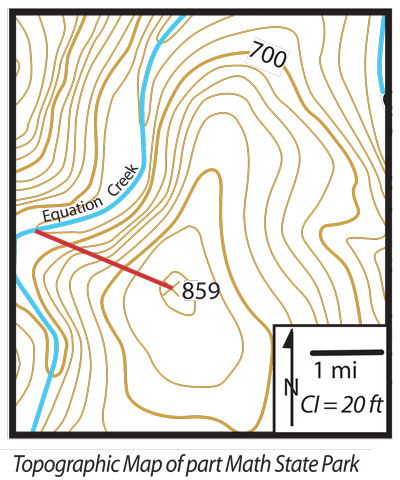
1. What is the contour interval (sometimes abbreviated CI)? Convert to metric.
the contour interval is 20 feet.


2. What is the scale of the map? Convert it into the metric system.
 the scale of the map is 1 cm:1.6 kilometres


3. What is the gradient of the line? Calculate in metric system.
121 feet = 36 metres, 2 miles = 3200 metres == gradient is 0.01125

Saturday, April 30, 2011

Venice a City in Five Images

1. 5 aspects that make Venice unique
  • brick restoration - the salt water that fills the canals wears away the bricks over time and causes them to desintergrate. this means they often need to be replaced which involves the isolation of various canals, drainage and rebuilding of the walls.
  • flooding - the tides in venice can cause a whole area of the city to flood if it is high enough above average. this doesnt happen as regularly anywhere else in the world.
  • bridges - there are 438 bridges in venice which is a lot more than there used to be. bridges make it easier to get from place to place in venice and the use of boats and canoes and the like has become less and less needed, although they are still a major part of the cities cultural identity.
  • building techniques - the buildings on venice are structured to suit their geographical location and environment. the walls are designed so they will lean inwards if they do lean at all. this means the floors wont fall through as they are being pushed together. if the walls leant outwards the floors would loose its support and cave in.
  • sewerage - the sewearge in venice is very unique as it doesnt really run through a labyrinth of pipes, it simply gets depositied into the surrounding canals.
2. Paris, France - 5 aspects that make this city unique.


The French Eiffle Tower is a monument that represents the city of Paris and the country of France. when people see this magnificant structure they instantly think of Paris which adds to why this city is so unique in so many ways.


the river cruise on the river thames in paris is a representation of relaxation and a feel good lifestyle. Paris is known globaly for its "young" lifestyle and modernised culture. its such a feel good city and place to be which is why so many people from all around the world travel here to have a taste of their lifestyle. the people in paris are also generally polite and welcoming which is also another fantastic element that adds to this cities identity.


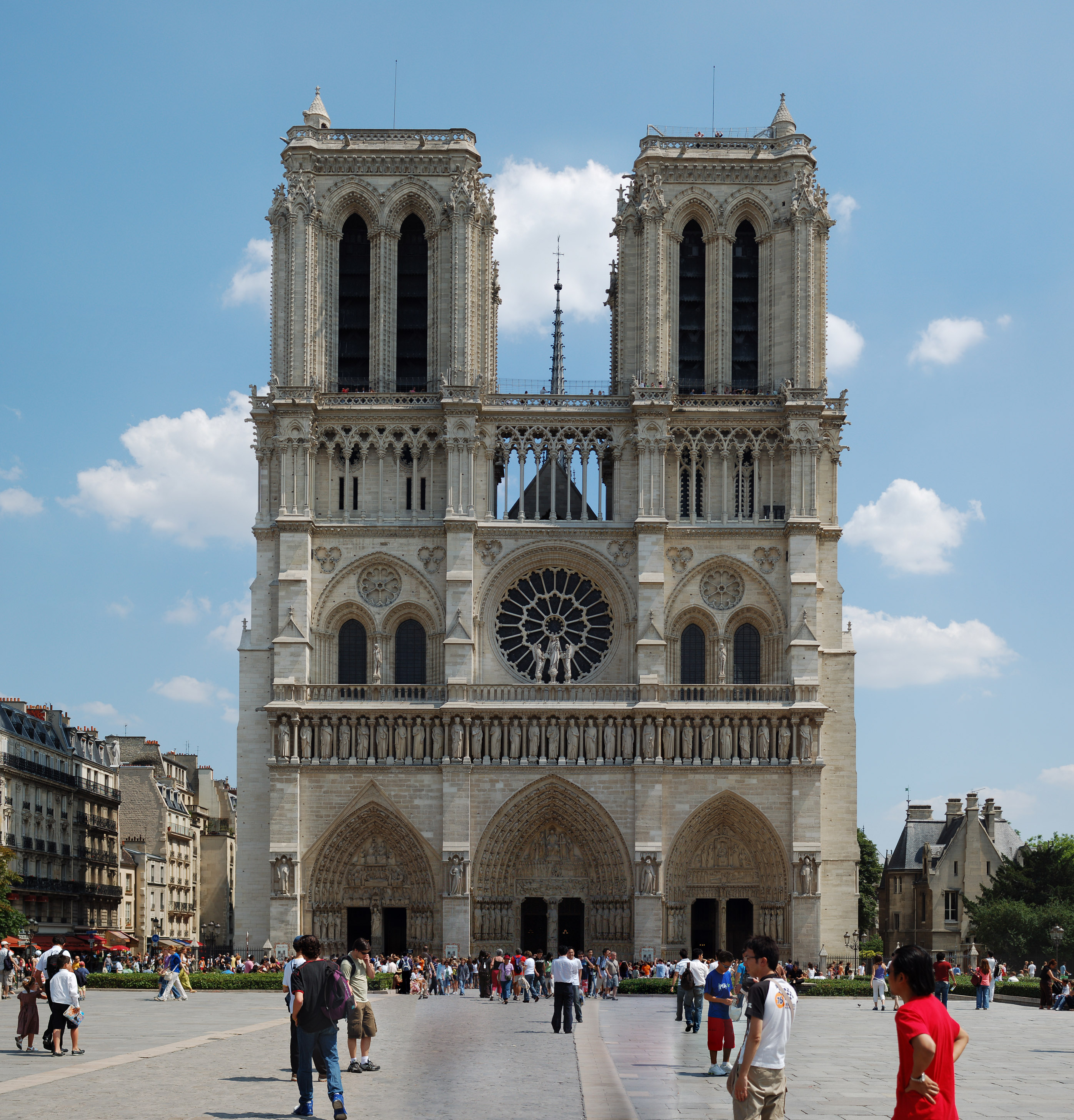
paris has a rich history which gives the city even more culture and identity. and example of this can be the notre dame. this is a major tourist attraction that is intriguing and unique. on a larger scale france has a rich history as well, and this only adds to why paris is such a good place to be. not only is it different in its own way it represents france as a country.


France is known for its exquisite food and drink, especially cheese and wine. when people talk of good wines and delicious cheese, french wine and cheese are always of the best quality and among the most expensive. as paris is the main city in france it is the forefront of this notion and represents the country accordingly. this is another aspect that makes the city unique.


Paris is also known for its amazing architectual structures and its artwork. the Louvre musium in Paris is one of a kind as it holds some of the finest artworks in the world. this included the fabled mona lisa by leonardo da vinci which is probably the most well known and most famous painting in the world in history. even just having the painting in the city makes Paris unique.

Wednesday, March 23, 2011

Urban Sprawl or Consolidation: Jordan Springs

1. this would be an example of urban sprawl as its a completely new suburb that is spreading outwards. it isn't considered urban consolidation because its not building up on other buildings, compacting space and raising the population in a small area. its completely new and is moving outwards.
2. i think there are many good things and many bad things that could happen as an outcome of this development. in the article it says that it creates job opportunities, it's environmentaly friendly and it will have a strong community spirit. the development as a whole would however impact the environment massivly. the natural habititat in the area would be destroyed in the building process, the environment and the ecosystem would be affected massivly and animals will be driven from their homes. this new development also means that more resources will need to be supplied by sydney, such as roads and electricity.

Wednesday, March 16, 2011

Urban Planning and Development

1. the term urban sprawl is used to describe a city when it becomes to populated and is forced to spread outwards.
2. the term urban consolidation is used to describe the rising population in cities.
3. a highly urbanised country is a country that has a lot of urban spraw, has a high population density.
4. it is estimated that 92% of australians live in urban areas. australia's urban population is concentrated in major cities, which in 2006 accounted for over 13 million people or 65% of Australia's population.
5. the main factors that have influenced the location's of Australians capital cities are transport advantages, also the flat land that is available and the climate.
6. population density is the population in a particular area divided by the amount of land in the area. population density is related to urban sprawl as it is a solution to the problem. the move from urban sprawl to higher population density in cities is urban consolidation.
7. Australian cities don't have very high population densities. Sydney for example has a population density of 2076 per square kilometre compared to Mumba with a population density of 29650 per square kilometre.
8. there are many advantages that urban consolidation has over urban sprawl. infrastructure like public transport, electricity and water supplies are already built for the developments.
9. urban planners have had to be inovative in their design of apartments and new estates to manage the impacts of population growth in cities.
10. A) Melbourne
B) Population divided by land area
C) Sydney, Melbourne, Adelaide, Woolongong, Perth, Newcastle, Canberra, Brisbane, Gosford
D) 8 out 10 of Australias largest cities have a population density over 1000
11. many of the residents would stronly argue that the development of apartments such as the ones in fig. 9.5 lower the value of their properties. also the constant noise and disruption would be extremely annoying for residents who are trying to live their normal lives.
12. living in a detached housing estate is a lot more private than apartment living as you are on your own property. it also allows you to make the regulations and rules, such as the ownership of pets, etc. having your own property also enables you to design and aesthetically modify your property to the way you like, it allows you to give your home its own character. it is also easier to have a family which many people want. an advantage of living in an apartment however means you are usually closer to civilisation in terms of entertainment, work and other aspects that make up an urban area.  sometimes it gives you things like water views over a harbour, landmark, etc.

Urban Renew and Decay

aesthetics - The branch of philosophy that deals with the nature and expression of beauty, as in the fine arts.
this picture expresses various colours, emotions, messages and feelings that all contribute to the overall aesthetical qualities.

safety - The condition of being safe; freedom from danger, risk, or injury.
in this picture the man in the cage is protected by the metal framework from the enormous man eating, great white shark.

slums - A heavily populated urban area characterized by substandard housing and squalor.
this is a picture of a slum located in  Mumbai, as you can see it is extremely overpopulated, the houses are very low grade and are made out of thin sheets of metal and finally the good health and cleanlyness of the place is not evident or inviting

decay - To break down into component parts; rot.
decay is evident in this photo as the peice of fruit is rotting.

reconstruction and renewal - is the the rebuilding and renewal of towns and cities that have been demolished as a result of war, natural disasters and other destructive forces.
in this photo the building has been demolished during the war and an attempt to rebuild it is being started.

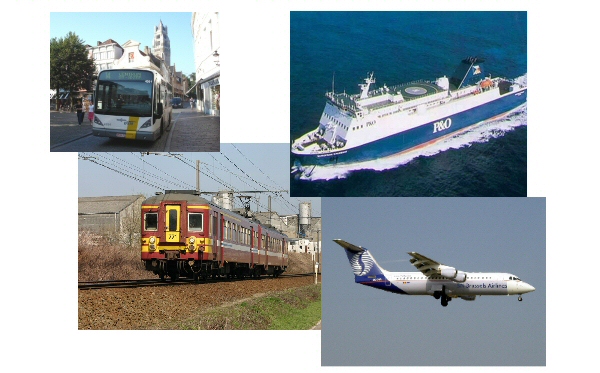
Transport -  To carry from one place to another; convey. transport involves the moving of a particular thing or a group of things from one location to another.
transport examples in this phto are trains, plains, vehicles (bus) and boats. they are all forms of transport.

suburbanization - Of, relating to, or characteristic of a suburb.
in this photo there is an overcrowded suburb which is a characteristic that makes it what it is.

environmental factors - environmental factors are different contributors that affect the environment in different ways.
in this photo an industrial area is producing air polution which is an environmental factor.

Light and Sound - Light and sound are aspects that essentially make up the world we live in. light comes from the sun and enables us to see our surroundings. sound enables us to hear things that are happening. swithout light and sound there would not be a civilisation to live in.
in this photo the police siren is producing blue and red lights and also giving off sound to let everyone in the surrounding area know there is a police car.

Monday, March 7, 2011

7.6 The Tweed River Entrance Sand Bypassing Project

1. it became necessary to extend the tweed river breakwaters due to further sand build-up at the entrance of the heads.

2. The breakwater on the southern side of the tweed river acted to trap sand that would naturally be moved in a northerly direction by longshore-drift. The continual build-up of sand on the southern side of the breakwater eventually caused the river mouth to once again silt up.
3. The dredging of the sand at the mouth of the Tweed River was trucked and moved to the gold coast for beach nourishment. This is an expensive solution and one that would need to occur continually in order to maintain the sand supply to the beaches. The removal of the sand is essential for the ships to be able to get through the tweed river mouth. The natural process that causes sandbars to form is silting.
4. The dredging of the tweed river mouth and associated beach nourishment program was only a short term solution as the silting of sand at the mouth of the tweed river is an ongoing process and this management strategy is just not effective long-term.
5. The TRESBP replaces the natural process known as longshore drift in the construction of breakwaters. This construction breaks the drift of the ocean when it hits the beach as it cannot go past the wall of rock.
6. I believe the TRESBP is one of the most successful projects in Australia for a few reasons. Firstly because the intended aim of the project was to stop silting at the mouth of the Tweed River and to stop the formation of a sand bar. The construction of breakwaters was the best thing that could have been done and did work in stopping the silting – temporarily. Even though it is very costly this project can be used as a learning curve for future projects. It gives developers an idea on what they should do the future, which may be even more beneficial and less costly. I’d say as a whole the TRESBP was very successful.
7.  –
8. 1962 – you can see that the Tweed River entrance is extremely vulnerable to the build up of sand known as silting and something needs to be done.
1969 – The construction of the breakwaters has opened the Tweed River heads and caused the beach to shift position. There is more sand on the surrounding beaches as the process of dredging has also taken place.
1994 – The breakwaters haven’t really changed but the amount of sand on the surrounding beaches has increased dramatically. Fairly soon a new solution will need to be put in place as the sand will reach the edge of the breakwater and will once again, begin to form a sandbar.
9. In the topographic map the length of the breakwater is approximately 350 metres in 1994. In 1962 the breakwater was not present.